Understand what’s happening
What is work doing to you?
Too much work. Poor treatment. Being asked to do something that goes against what you believe is right. A complaint or investigation that creates even more strain.
Sometimes it’s one thing. Often, it’s several things happening at once.
Understanding what’s affecting you can make it easier to work out what you need next.
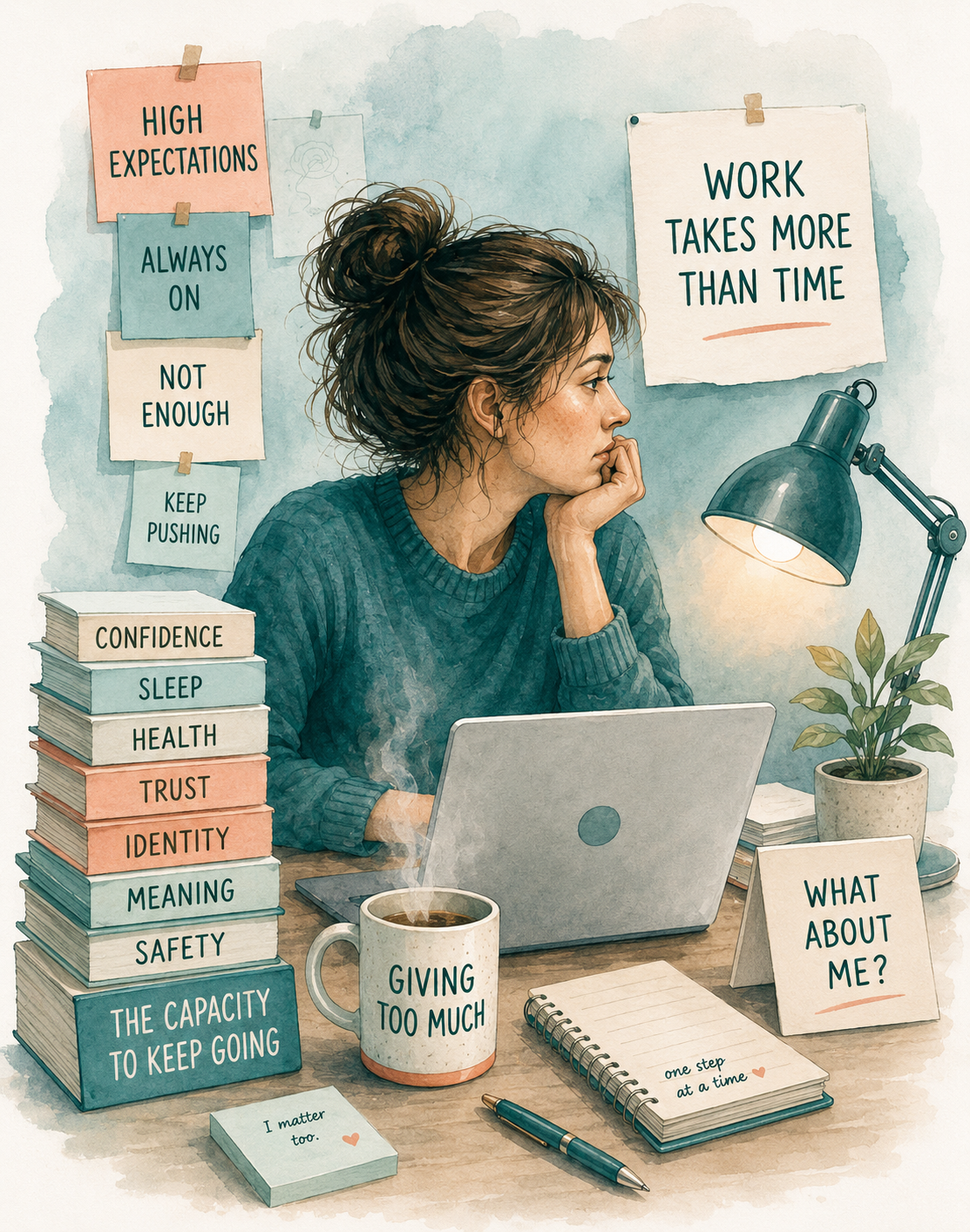
Other ways work affects people
Some of what you’re dealing with may have another name.
Burnout is the word most people reach for, and often it fits. But there are other experiences that can sit alongside it, or look very like it from the inside. Six are worth knowing about.
Burnout
Exhaustion that sleep doesn’t fix, going flat about work you used to care about, and the sense that nothing you do makes much difference.
Moral injury
When work repeatedly asks you to do, accept or witness things that go against what you believe is right.
Occupational invalidation harm
When your experience at work is repeatedly dismissed, minimised or disbelieved — leaving you questioning yourself as well as what happened.
Vicarious trauma
A slower change in how safe the world feels, and how much you trust people.
Institutional betrayal
When you turn to your organisation for support or protection, and its response causes further harm.
Procedural injustice
When a workplace process feels unfair — you aren’t heard, decisions aren’t explained, or the rules don’t seem to be applied fairly.
These are ways of describing experiences, not diagnoses. Most people recognise more than one.
What’s happening at work
The work can be hard. The conditions can make it harder.
Work can be demanding because of what the job itself asks of you — and because of the conditions you’re expected to work in.
It helps to separate the two. Some demands are part of the work itself. Others come from how the work is organised, managed or supported. Often, both are happening at once.
What the job asks of you
- Emotionally demanding conversations, day after day
- Being close to other people’s distress
- Customers, clients or patients who are angry, frightened or unreasonable
- Work that is genuinely hard to do well
The conditions you do it in
- Chronic understaffing
- A workload nobody could finish
- Poor supervision, or none at all
- No one backing you up when something goes wrong
- No time to recover after a bad interaction
- Conditions that are unsafe or unworkable
The job and the conditions can both be difficult at the same time — and they don’t have the same fix.
Real life examples
What this can look like in real life
Different jobs. Different circumstances. Workplace psychological harm can show up in many ways. These examples are fictional composites based on common patterns.
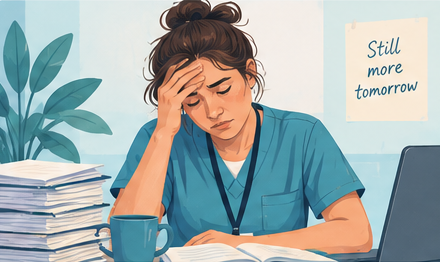
Maya
Community support worker
The workload never changed
Two colleagues left and weren’t replaced. Maya’s caseload kept growing, and she was regularly finishing notes at home. She tried taking leave, exercising and getting more sleep. It helped for a while — but every time she returned, the same workload was waiting.
What’s going on: Prolonged excessive demands → burnout risk.
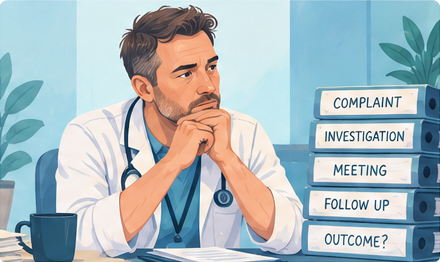
Daniel
Health professional
The process became part of the harm
Daniel raised concerns about a practice he believed was unsafe. What followed was months of meetings, changing explanations and repeated questioning. Eventually, dealing with the response was causing as much distress as the original issue.
What’s going on: Moral conflict + procedural injustice.
Priya
Retail supervisor
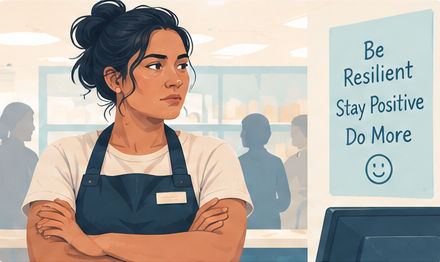
The focus shifted to her coping
Priya repeatedly raised understaffing and aggressive customer behaviour. The response focused on stress management and resilience. The staffing problem remained — but the conversation had shifted to how well Priya was coping with it.
What’s going on: Unsafe conditions + occupational invalidation.
Maya, Daniel and Priya are fictional composite examples. They illustrate common workplace patterns rather than individual cases.
What self-care can and can’t reach
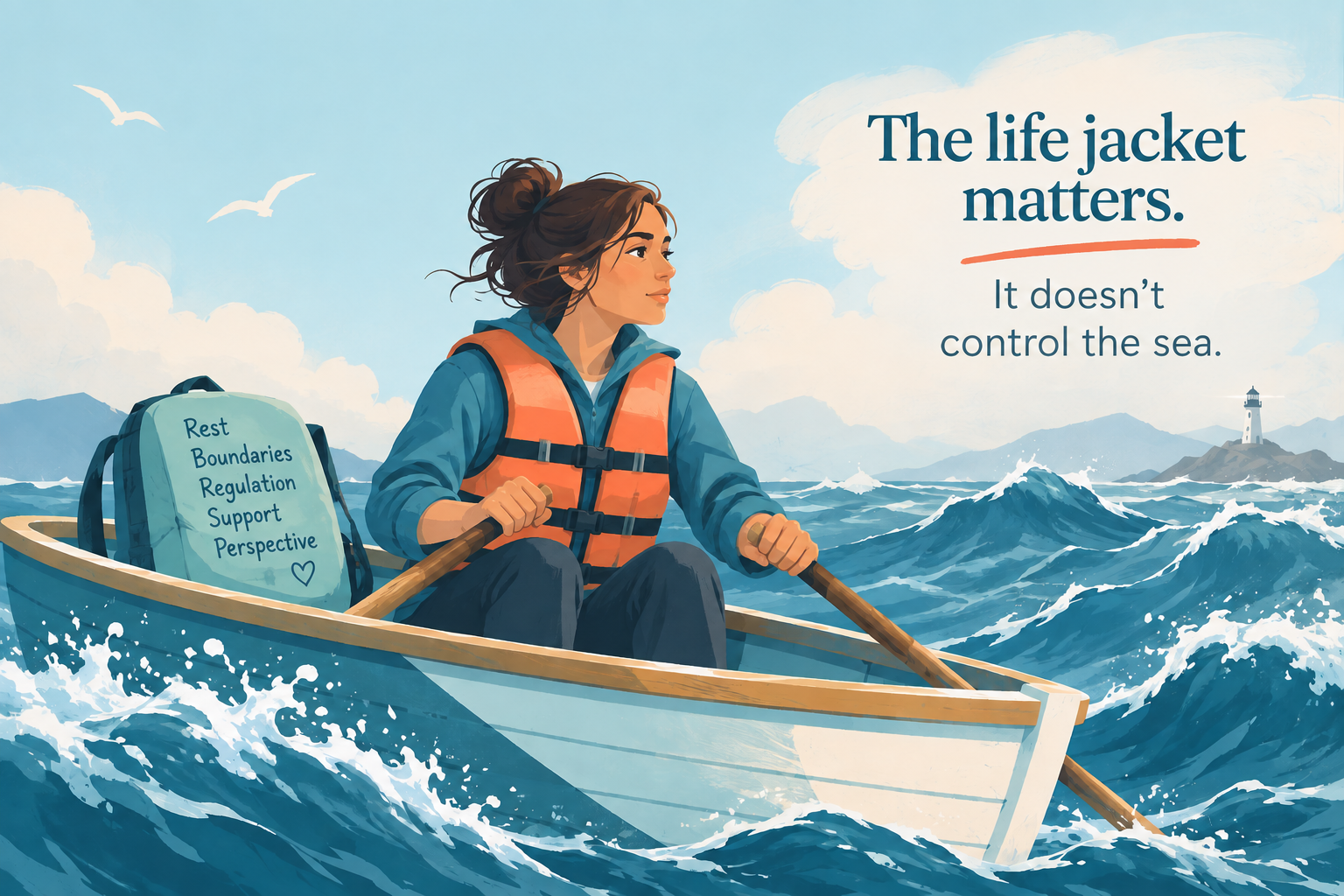
You can’t self-care your way out of every workplace problem.
This isn’t an argument against self-care. Regulation, recovery, sleep, boundaries and knowing your own limits genuinely help, and they are worth taking seriously. Most people in this work are already doing more of it than they get credit for.
The difficulty is what happens when individual strategies are offered as the whole answer. Breathing exercises are not a workload policy. A resilience workshop does not resolve a moral conflict. A wellbeing app cannot make an unfair process fair.
When the cause sits in conditions — workload, staffing, leadership, safety, fairness, the impossibility of practising the way you were trained to — individual effort can’t reach it. And when that effort doesn’t work, people tend to conclude the failure is theirs.
The useful question isn’t am I coping well enough? It’s what is actually causing this, and is anything being aimed at the cause? Where harm has occurred, it is worth working out accurately where it came from — rather than assuming it started inside the person.
What you can do — and what the workplace needs to do
What you can influence
- Recovery and rest
- Regulating your body when you’re overwhelmed
- Recognising your limits and values
- Seeking support
- Deciding what you will and won’t keep carrying
- Raising concerns or asking for change
What the workplace is responsible for
- Safe and reasonable workloads
- Adequate staffing and rostering
- Making ethical practice possible
- Responding appropriately when concerns are raised
- Fair and transparent processes
- Leadership, culture and psychological safety
Individual strategies can help you cope with difficult work. They cannot make unsafe or unreasonable working conditions safe.
Sometimes it’s the working conditions.
Sometimes it’s the workplace culture.
Sometimes it’s what happens when concerns are raised.
Often, it’s more than one.
Where to go next
If some of that sounded like you.
None of this is a diagnosis. It is language for working out what happened, and where to aim next.